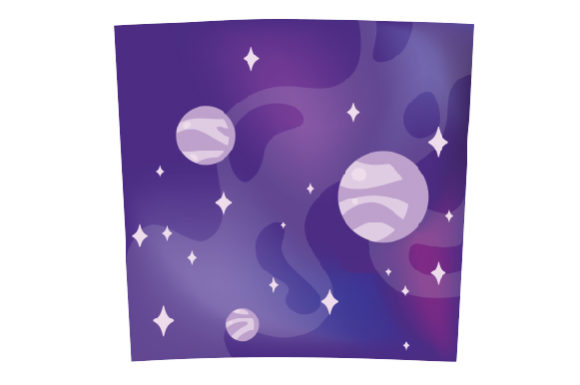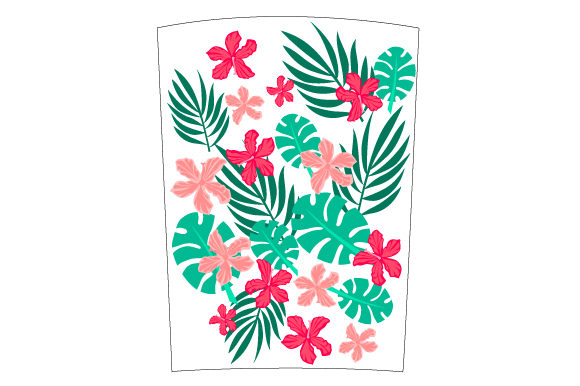
30oz Green Tumbler Wrap
A Designer’s First Glance: Clean, Calm, and Commercially Smart
When I opened the 30oz Green Tumbler Wrap file set—SVG, transparent PNG, EPS, and DXF—I wasn’t looking for flash. I was scanning for function: Does this design breathe on fabric? Does it hold up at 3” wide *and* scale cleanly to 5”? My first impression? It’s a quiet achiever. The green isn’t loud or acidic—it’s grounded, like sage or forest moss—making it easy to pair with natural linens, heather grey sweatshirts, or cream canvas totes. The wrap layout follows the gentle curve of a tumbler, but its clean vector edges translate effortlessly to flat embroidery surfaces. This isn’t just a cup graphic—it’s a versatile embroidery file disguised as a drink accessory.
Real Project Test: Stitching It Into a Small-Business Sweatshirt Line
Last week, I prepped a batch of unisex crewnecks for my Etsy shop’s spring launch—think soft cotton-blend sweatshirts, embroidered with nature-adjacent motifs. I chose the 30oz Green Tumbler Wrap not for tumblers (though yes, it works there), but as a subtle sleeve accent: scaled down to 2.75”, rotated 15°, and stitched in matte olive thread on oat-colored fleece. Why? Because customers respond to cohesion—not clutter. That gentle arc and organic line weight read as intentional, not generic. It didn’t scream “coffee lover.” It whispered “thoughtful maker.” And that matters when you’re pricing handmade apparel at $89 and need buyers to feel the value before they even touch the fabric.
Where It Shines—and Where to Pause
The 30oz Green Tumbler Wrap excels on stable, medium-weight fabrics: canvas tote bags, tea towels, aprons, and structured pillow covers. Its moderate stitch density avoids puckering on quilting cotton, and the open negative space gives satin stitch curves room to lay flat. As an embroidered patch, it holds crispness—even when fused and sewn onto denim jackets.
But here’s where I slow down:
- Stretchy or thin fabric? Avoid direct hooping on knits without tear-away + cut-away stabilizer combo. That smooth outer curve can distort if the base fabric shifts.
- Dark backgrounds? The design relies on shape—not heavy outlines—so test contrast early. A light mint thread on charcoal linen reads beautifully; white thread on black needs extra fill density to avoid “ghosting.”
- Curved surfaces like caps? It *can* work—but only if digitized with reduced pull compensation. Since this is a vector-based digital embroidery file, not a pre-digitized stitch file, confirm your digitizer adjusts for crown curvature before running on headwear.
- Tiny lettering or fine interior details? There isn’t any—thankfully. That makes it forgiving for baby embroidery, nursery decor, or holiday gifts where stitching clarity trumps complexity.
What It Adds to Your Finished Product—Beyond Aesthetics
Using the 30oz Green Tumbler Wrap subtly elevates perceived professionalism. Unlike busy clipart-style designs, its restrained geometry says “designed,” not “downloaded.” On a custom embroidered kitchen towel sold in a boutique, it signals care—not convenience. For Etsy sellers listing printable mockups, this design layers cleanly over lifestyle photos without competing with textures or patterns. And because it’s rooted in real-world utility (a tumbler wrap), it feels authentic—not abstract—in product storytelling.
It also strengthens brand consistency. If your craft business centers on wellness, sustainability, or slow living, this green motif reinforces that quietly. No slogans needed. Just shape, tone, and intention.
Practical Notes Every Embroidery Designer Should Check
Before cutting thread or uploading to your machine:
- Test on scrap fabric first—especially if using textured weaves like burlap or looped terry cloth.
- Review stitch density visually. Zoom into the SVG or EPS. Are inner curves overly dense? Adjust if needed before digitizing.
- Confirm hoop size compatibility. At full width (~4.2”), it fits standard 5x7 hoops comfortably—but verify spacing if combining with other elements.
- Inspect small details in both black-and-white and color mockups. Does the flow hold when stripped of green context?
- Use appropriate stabilizer: medium-weight cut-away for knits, tear-away for stable wovens, and fusible + tear-away for lightweight linens.
- Check licensing. Since this is listed under Crafts and Cups Amp, confirm whether commercial use—especially resale of finished embroidered items—is permitted. When in doubt, contact the seller directly.
Fitting Into Your Creative Workflow—Not Just Your Hoop
The 30oz Green Tumbler Wrap isn’t a one-off novelty. It’s a flexible design asset. Use it as a standalone motif on a baby onesie hem, repeat it as a border on a linen napkin set, convert it to applique for a denim backpack, or layer it beneath hand-lettered text on a holiday gift sweater. Its adaptability makes it ideal for craft fair inventory—you can stitch it across multiple product types without visual fatigue.
For digital product sellers, it’s a strong candidate for themed bundles: “Sustainable Living Embroidery Pack” or “Café Culture Design Set.” Its clean vector foundation means it rescales for social media previews, packaging labels, or even laser-cut wood templates—without pixelation or redraws.
Final Thought: It’s Not About the Tumbler—It’s About the Tone
I keep coming back to mood. The 30oz Green Tumbler Wrap doesn’t shout. It settles. That makes it unusually effective for products meant to be kept, gifted, and lived with—not scrolled past. Whether you’re embroidering a wedding guest book cover, restocking your small shop’s best-selling tote bag, or building a cohesive line of personalized gifts, this design earns its place by being reliable, refined, and quietly memorable. In a market flooded with frantic trends, sometimes the most powerful statement is a calm curve—and the right shade of green.