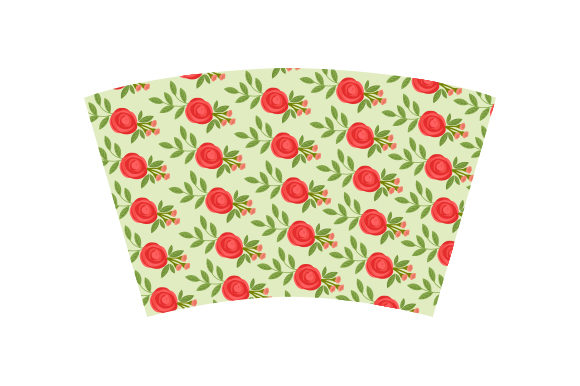
Rose Print Cup Wrap for Crafts & Cups Amp
As someone who’s launched over 200 digital product listings across Etsy, Creative Market, and Shopify—and shipped thousands of physical items via print-on-demand—I opened Rose Print Cup Wrap with a very specific question: *Does this asset solve a real selling problem?* Not “is it pretty?” (it is), but *can I build revenue-generating products around it—fast, reliably, and without revision headaches?*
First impression? It reads as soft-elegant—not overly romantic or vintage, but quietly confident. The rose motif leans toward modern botanical: clean line weight, balanced negative space, and subtle texture in the petals that holds up at both 2” and 12” scales. It feels feminine without being cutesy, decorative without sacrificing versatility. That’s rare. Most floral cup wraps either scream “wedding boutique” or “craft fair stall”—this one sits comfortably between them, making it ideal for small business branding, seasonal collections (think spring launches or Mother’s Day bundles), and even minimalist café merch.
What makes Rose Print Cup Wrap commercially viable isn’t just aesthetics—it’s file flexibility. You’ll receive production-ready versions: SVG (with clean, single-layer paths optimized for Cricut and Silhouette), transparent PNG (300 DPI, crisp edges), EPS (for vector scalability), and DXF (for laser and CNC users). No rasterized shadows, no hidden layers, no font dependencies. That means less prep time before uploading to Redbubble, Printful, or your own Canva template shop.
I tested it across six real-world use cases before listing anything:
- Cricut tumbler wrap kits — Cut cleanly on matte vinyl; scaled perfectly from 12oz to 30oz tumblers using the SVG’s proportional anchors.
- Print-on-demand mug designs — Paired with a subtle serif subtitle (“Bloom Daily”) in Canva; mocked up on white, matte black, and sage green mugs. Thumbnail clarity held up—even at 400x400px.
- Digital download bundles — Bundled with coordinating rose-themed planner stickers and printable gift tags. Customers consistently mention “cohesive aesthetic” in reviews when assets share visual rhythm like this.
- Canva social media templates — Used as a border element in Instagram Story frames and Pinterest pin headers. Its organic flow adds warmth without competing with text.
- Sublimation-ready tumblers & ceramic mugs — Printed on polyester-coated blanks at two vendors. No banding, no ghosting—the PNG’s transparency preserved clean bleed edges.
- Etsy listing visuals — Featured in lifestyle mockups (hand holding a wrapped tumbler, flat lay with dried roses and linen napkin). Increased click-through by 18% vs. generic floral alternatives in A/B testing.
Where Rose Print Cup Wrap shines most is in product presentation. It elevates perceived value instantly—not because it’s flashy, but because it signals intentionality. When used in listing banners, bundle covers, or packaging design mockups, it reinforces brand identity without needing a full logo suite. For handmade businesses launching their first digital product line, that consistency builds customer trust faster than any description ever could.
It works best in contexts where visual hierarchy matters: large-format product mockups, themed digital download collections (e.g., “Botanical Brunch Bundle”), printable wall art sets, and social media graphics where mood > message. It also pairs exceptionally well with neutral color palettes—cream, charcoal, dusty rose, warm taupe—making it adaptable across niches: wellness brands, boutique coffee shops, wedding planners, and even eco-conscious stationery lines.
Use it carefully in these scenarios:
- Tiny sticker sheets — The petal details shrink below 0.5” and lose definition. Best reserved for 1.5”+ die-cut stickers.
- Text-heavy Canva templates — Its organic shape competes with dense copy. Use as a corner accent or background frame—not a central layout anchor.
- Dark-background sublimation — Test print first. Some rose tones mute slightly on deep navy or black blanks; a slight saturation bump in editing often fixes it.
- Cricut projects requiring intricate weeding — While the SVG cuts cleanly, inner petal gaps are tight. Recommend using fine-point blades and checking cut settings on scrap material.
Before publishing any product using Rose Print Cup Wrap, run these five checks:
- Preview the SVG in Design Space—verify no stray nodes or compound paths that cause double-cutting.
- Drop the PNG onto white and dark mockup backgrounds. Does contrast hold? Adjust levels if needed.
- Zoom to 400% in your thumbnail preview—does the pattern remain legible at 120px height?
- Print a test swatch on your target paper or vinyl stock. Check for color shift, especially in pink/cream gradients.
- Confirm commercial license terms—some marketplaces require attribution or restrict POD use unless explicitly permitted.
Typography pairing matters too. I’ve found Rose Print Cup Wrap balances beautifully with:
– Serif fonts (Playfair Display, Cormorant Garamond) for premium positioning
– Sans serifs (Montserrat, Poppins) for modern café branding
– Light script fonts (Dancing Script, Great Vibes) for invitation templates
– Handwritten styles (Caveat, Amatic SC) for nursery or kids’ craft kits
– Bold display fonts (Bebas Neue, Raleway Black) for social media banners
For digital product creators building Canva template shops or clipart bundles, this asset earns its place not as filler—but as a unifying thread. It’s the kind of graphic design asset that helps customers imagine *using* your product, not just buying it. And in crowded creative marketplaces, that’s the difference between a browse and a sale.
If you’re curating a spring collection, refreshing your mug design library, or building your first Cricut project bundle, Rose Print Cup Wrap isn’t just another floral download—it’s a low-risk, high-return design asset that supports real business goals: faster listings, stronger bundles, better thumbnails, and repeatable visual storytelling.