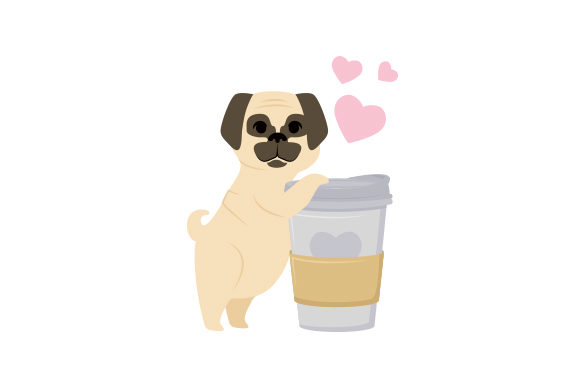
Dog Cuddling Coffee Cup: Crafts & Animals for Local Branding
As a brand designer who’s developed visual identities for over 30 local businesses—from indie coffee roasters and handmade soap studios to seasonal candle boutiques and neighborhood bakeries—I evaluated Dog Cuddling Coffee Cup not as clipart, but as a working graphic design asset for real-world small business branding. My test case? A beloved downtown pet-friendly café launching its first line of branded ceramic mugs and oat-milk latte gift sets. The goal: warmth, approachability, and unmistakable local charm—without sacrificing professionalism.
A First Impression That Feels Human, Not Stock
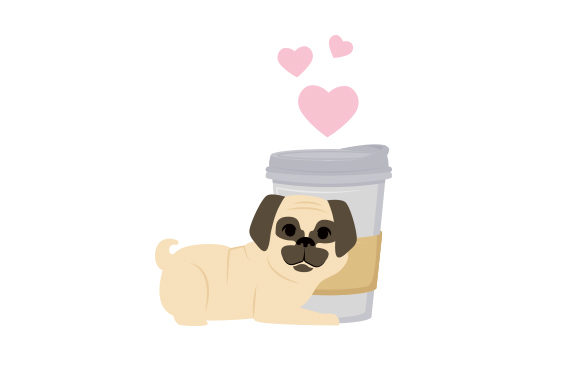
The Dog Cuddling Coffee Cup illustration lands with immediate emotional resonance: soft curves, gentle negative space, and a quiet narrative of comfort. It reads as handmade, friendly, and organic—not cartoonish or overly polished. There’s no forced cuteness or exaggerated whimsy. Instead, it suggests quiet confidence: the kind of visual that fits equally well on a linen tea towel at a home decor shop or a matte-finish label on lavender-scented dog shampoo sold at a local boutique. It leans into Animals with sincerity—not mascot energy, but companion energy. And as a Crafts-category asset, it carries the subtle texture and intentionality of hand-drawn work, even in vector form.
Where This Design Earns Its Place in Real Business Use
In our café project, we deployed Dog Cuddling Coffee Cup across six high-impact touchpoints—each revealing where this asset shines:
- Product labels: Used as a central icon on 2 oz. oat-milk latte sachets—scaled cleanly at 1.25" tall with crisp SVG rendering.
- Packaging accents: Repeated as a subtle border motif on kraft gift box wraps (via transparent PNG), reinforcing brand rhythm without overwhelming.
- Hero graphics: Featured large-scale on Instagram carousel posts announcing the mug launch—paired with warm serif typography for instant readability.
- Thank-you cards: Printed in muted terracotta ink on recycled cotton paper—its simplicity held up beautifully in single-color print.
- Seasonal campaign visuals: Adapted into a winter version (with knit scarf detail added in Illustrator) for holiday “Paws & Pour” promo banners.
- Product mockups: Placed on realistic ceramic mug templates in Adobe Dimension—no pixelation, no edge fringing, thanks to clean vector paths.
This isn’t just decoration. It strengthens visual hierarchy by anchoring attention before text. It builds customer trust through consistent, thoughtful execution. And because it’s built with scalability in mind, it delivers professional branding whether printed at 0.5" on a hang tag or blown up to 48" for a sidewalk chalkboard menu.
Strategic Fit: Where It Adds Value (and Where It Doesn’t)
Dog Cuddling Coffee Cup excels when used as a decorative brand element—not a logo replacement, but a trusted supporting player. It works best in contexts where warmth and relatability are strategic advantages: product packaging for pet wellness brands, social media graphics for local bakeries running “Dog Day Fridays,” printable inserts inside handmade soap boxes, or seasonal packaging for autumn-themed candle collections.
Use it carefully in these situations:
- On very small labels (under 0.75")—fine details like paw texture or steam curl may blur in production.
- Alongside dense ingredient-heavy layouts—its gentle presence can get lost next to regulatory text blocks.
- Against low-contrast backgrounds (e.g., light gray on off-white)—always test transparency in your final print file.
- In luxury minimalist brands—it’s intentionally warm and textured, not austere or monochromatic.
- Where it competes with essential information (price, size, certifications)—never place it directly over critical copy.
What Every Brand Designer Should Test Before Finalizing
This isn’t a “drop-in-and-go” Canva template. As a commercial design asset, it demands hands-on vetting:
- Test it on real packaging mockups—not just screen previews. Print a 3" x 3" sample on your actual label stock.
- Check black-and-white usage: Does the silhouette hold up if you need a one-color stamp or blind deboss?
- Preview it on small labels at actual production size—especially if using the EPS or SVG in dieline software.
- Test it with your brand colors: Try it against your primary palette swatches in both digital and printed form.
- Compare it with competitor packaging—does it differentiate, or blend in?
- Review PNG transparency: Open the transparent PNG in Photoshop with a dark background—check for faint halos or anti-aliasing bleed.
- Inspect SVG editability: Can you easily isolate the dog, cup, and steam as separate layers for color customization?
- Test font pairings: Try it beside your brand’s serif, sans serif, script, and display fonts—does it harmonize or clash?
- Confirm commercial licensing: Ensure your use case (client work, physical product sales, resale packaging) is explicitly covered—don’t assume marketplace terms apply universally.
More Than Clipart—A Tool for Authentic Local Connection
For small business branding, authenticity isn’t abstract—it’s visible in how a customer pauses at your shelf, lingers on your Instagram story, or tucks a thank-you card into their tote bag. Dog Cuddling Coffee Cup supports that moment not by shouting, but by whispering recognition: “This was made for people—and pets—like us.”
It bridges handmade business craft with professional packaging design. It gives local business owners a shortcut to emotional resonance without outsourcing their voice. And because it arrives in versatile formats—SVG for precision, transparent PNG for quick social use, EPS for legacy print workflows—it adapts to real constraints: tight budgets, short timelines, and evolving platforms.
If you’re building a brand identity rooted in care, community, and tactile quality—whether for a children’s book illustrator launching merch, a florist adding pet-friendly bouquets, or a food brand designing compostable coffee sleeve art—Dog Cuddling Coffee Cup isn’t just another digital product. It’s a quietly powerful piece of marketing visuals that earns its place—not because it’s trendy, but because it feels true.