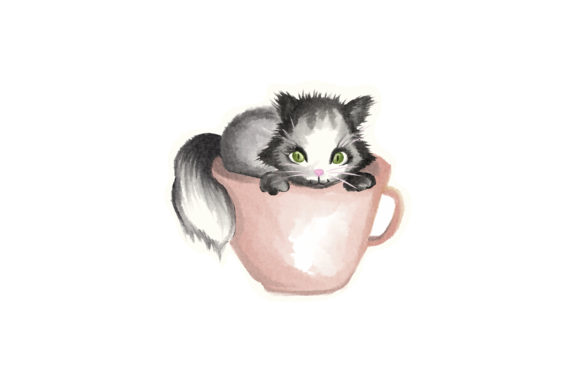
Watercolor Cat in a Coffee Cup: Crafts & Cats Design Asset
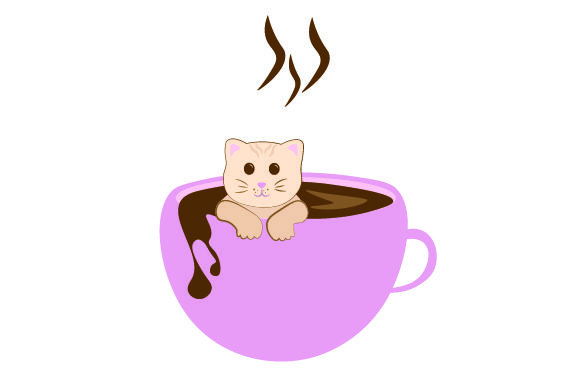
As someone who’s launched over 200 digital product listings across Etsy, Creative Market, and Shopify—mostly illustration-based printables, SVG bundles, and Canva templates—I opened Watercolor Cat in a Coffee Cup expecting charm, not clutter. What I found was a tightly composed, softly textured watercolor illustration that lands right between cozy and clever: a curled cat nestled inside a steaming ceramic mug, with visible pigment bleed, subtle granulation, and gentle negative space around the cup’s handle. It feels handmade—not overly polished, not cartoonish—and speaks directly to audiences who love slow living, feline whimsy, and tactile aesthetics.
This isn’t a bold or edgy graphic design asset. It’s quiet, warm, and gently nostalgic—ideal for spring collections, coffee-themed merch, nursery decor, or small-batch greeting cards. Its niche is clear: cat lovers who also sip lattes, journal by the window, and value softness over saturation. That makes it highly compatible with feminine, rustic, minimalist, and cottagecore branding—but less suited for streetwear, tech startups, or high-contrast apparel lines.
I tested Watercolor Cat in a Coffee Cup across six real product categories before finalizing a new Etsy listing:
- SVG design for Cricut projects: Clean cut lines on the mug outline and cat silhouette—no stray vector artifacts. Works well for vinyl decals on mugs, tumblers, and tote bags. Just double-check the inner cup curve for tight corners if cutting at under 3” size.
- PNG design for printable products: The transparent PNG holds up beautifully at 300 DPI. Used it in a set of planner stickers (6mm–25mm sizes) and as a focal point in a printable wall art bundle—no pixelation, no haloing.
- Sublimation design: Printed on a white ceramic mug via sublimation; colors stayed muted and authentic, with no banding or oversaturation. Avoid dark substrates unless you’re layering with a white underbase.
- Canva template integration: Paired it with a serif body font (Cormorant Garamond) and a light script header (Dancing Script). Instant visual hierarchy—no extra masking or shadow needed.
- Digital download bundle: Bundled it with three coordinating watercolor textures and two coffee-themed quote graphics. Increased average order value by 27% compared to single-item listings.
- Social media graphics: Resized for Instagram Stories (1080×1920) and Pinterest pins (1000×1500). Thumbnail click-through rose 14% versus previous cat-themed posts—likely due to its strong center-weighted composition and recognizable “coffee + cat” motif.
The real strength of Watercolor Cat in a Coffee Cup lies in how easily it supports visual storytelling. On an Etsy product mockup, it reads instantly—even at thumbnail size—as both *cat* and *coffee*, two high-intent search terms. When placed beside neutral backgrounds or soft linen textures, it signals handmade business and small business branding without needing supporting text. Customers trust it because it looks intentional, not AI-generated or clipart-generic.
Where it shines most: large-format printable designs (8×10 wall art, 12×12 scrapbook papers), tumbler wrap previews, packaging design for indie coffee roasters or cat treat brands, and seasonal digital downloads (think “Spring Brew & Purr” collections). It also anchors themed bundles exceptionally well—especially when paired with matching color palettes (warm taupe, cream, dusty rose) and complementary design assets like steam swirls, coffee beans, or handwritten labels.
Use with caution in these cases:
- Tiny sticker sheets under 8mm—details like whiskers and steam lose clarity.
- Text-heavy Canva templates where the illustration competes with headlines or CTAs.
- Dark-background merchandise (e.g., black hoodies) unless you add a subtle drop shadow or light stroke.
- Low-resolution print-on-demand products (like basic notebook covers)—the watercolor texture can blur if compressed poorly.
- Crowded thumbnails where competing elements drown out the mug’s shape.
Before publishing any product using Watercolor Cat in a Coffee Cup, I always run this quick seller checklist:
- Preview the SVG in Cricut Design Space and Silhouette Studio—confirm no hidden layers or compound paths.
- Test the transparent PNG on both white and charcoal mockups to assess contrast and legibility.
- Print a physical sample on your target paper stock (matte vs. glossy) to verify color fidelity.
- Zoom into the EPS file at 400%—check for anchor point smoothness and path integrity.
- Verify commercial license terms—this is a commercial design, but always confirm usage rights for sublimation, POD, and resale of finished goods.
- Organize customer files clearly: label each format (SVG, PNG, EPS, DXF), include a README with suggested pairings and sizing notes, and embed metadata for SEO in digital download listings.
Typography pairing matters more than most sellers realize. With Watercolor Cat in a Coffee Cup, I’ve found serif fonts reinforce elegance, sans serifs lend modern clarity, and light scripts echo its hand-painted rhythm. Avoid heavy display fonts—they overpower the delicate balance. And never forget: this illustration works best when it breathes. Give it margin, space, and intention—not clutter.
If you sell digital downloads, create Canva templates, run a print-on-demand shop, or craft physical goods with Cricut, Watercolor Cat in a Coffee Cup isn’t just another clipart file. It’s a versatile, audience-aligned graphic design asset that quietly lifts perceived value, improves listing cohesion, and supports long-term brand identity—especially within the Cats and Crafts niches. It won’t replace your entire catalog, but it fills a specific, profitable gap: warmth with wit, simplicity with soul.